Pre-Owned Sterling Silver Tea Sets: How to Read Hallmarks and Spot Mismatched Pieces | November 29, 2026
A pre-owned sterling silver tea set can look beautifully coordinated from across the table. Turn over the teapot, creamer, and sugar bowl, however, and their marks may tell different stories. One piece might have come from another workshop, a lid might be a later replacement, or a tray might have been chosen separately. Knowing how to read those clues helps you decide whether you’re buying an original service, a set assembled over time, or a combination worth collecting for its own design.
Start with two questions. What do the marks say about each piece, and what evidence connects the pieces to one another? A sterling stamp addresses the first question. Maker or sponsor marks, pattern details, and any available provenance help answer the second. Gray & Sons’ hollowware collection is a starting point for comparing the forms, origins, and descriptions you’ll encounter while shopping. Sterling Silver Tea Sets & Hollowware
How to Read Sterling Silver Tea Set Hallmarks
Begin underneath each vessel, then check the foot rim and any accessible lid flange. Use a loupe or a sharp close-up taken in angled light. Photograph the entire group of marks and record which piece it came from. STERLING and 925 indicate a claimed silver fineness of 92.5 percent. EPNS, short for electroplated nickel silver, identifies silver plate over a base-metal alloy. Treat a stamp as evidence and ask for clarification if it’s worn, ambiguous, or inconsistent with the listing.
On many British pieces, several punches work together. The lion passant is a traditional sterling standard mark used by English assay offices, while a separate symbol can identify the assay office. A sponsor’s mark identifies the party that submitted the piece for hallmarking. If there’s a date letter, compare its shape and surrounding shield with the correct office’s chart. American and other silver traditions use different marking conventions, so identify the likely origin before interpreting an unfamiliar symbol.
What Antique Tea Services Reveal About Silver Standards
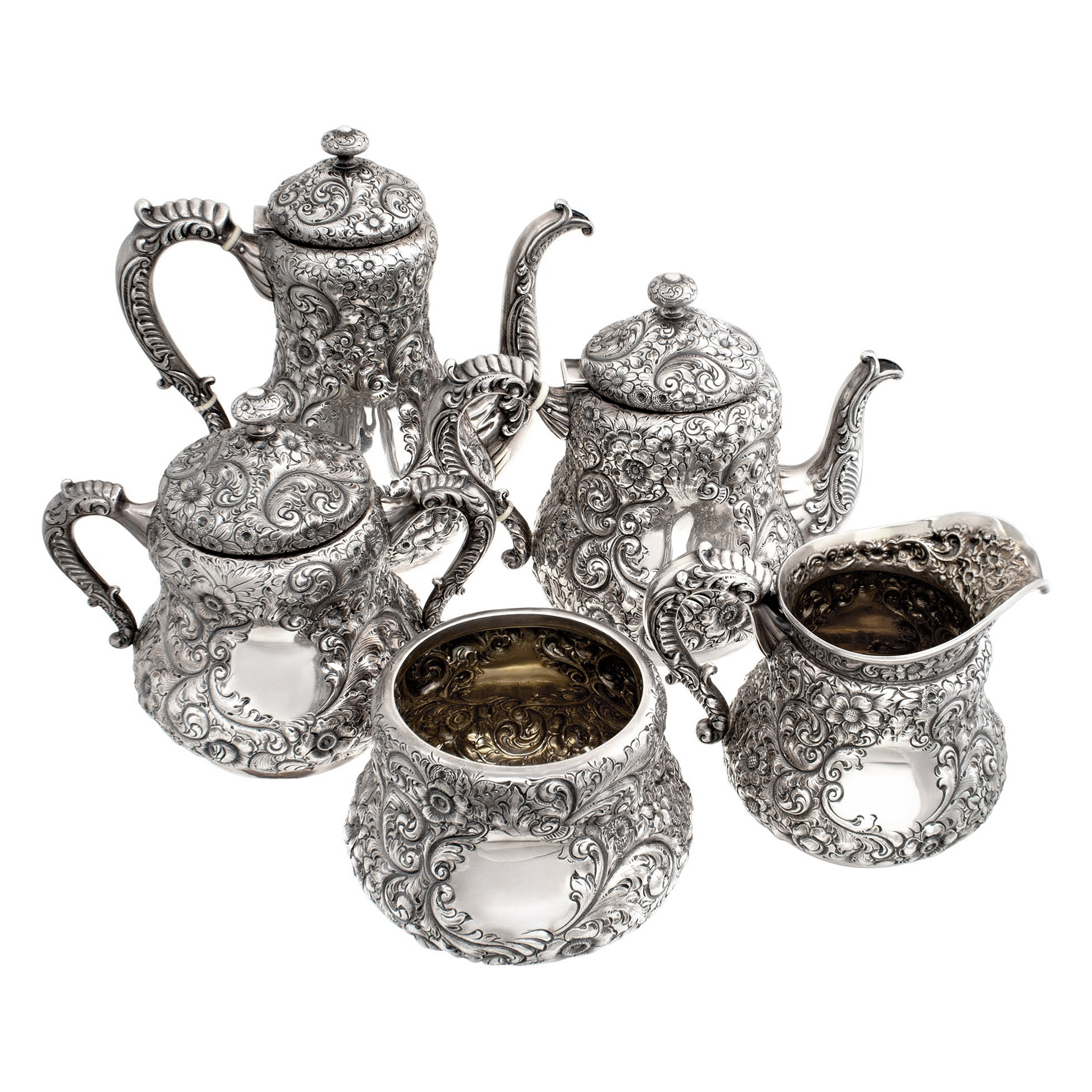
Two previously sold services from Gray & Sons show why period and material deserve separate attention. The circa-1880 five-piece Hamilton & Diesinger service was listed as sterling silver and features repoussé decoration, in which the metal is worked from behind to raise the design. On an ornate service like this, look at where a motif meets the foot or handle. Details at those transitions can help you compare pieces when the overall floral designs look similar. Hamilton & Diesinger five-piece sterling silver tea set, SKU N514081
The circa-1838 Jones Ball & Poor tea and coffee service was cataloged as coin silver, a term associated with early American silver that typically indicates a lower silver content than sterling. Exact fineness can vary. When comparing early American services, record the material description for every vessel along with its marks. A five-piece count and a period style tell you about the service’s form and appearance. The individual pieces carry the evidence about alloy and origin. Jones Ball & Poor five-piece coin silver tea and coffee service, SKU N514238
How to Spot Mismatched Pieces in a Silver Tea Set
Set the pieces side by side and compare the maker or sponsor marks, border profiles, feet, and handle attachments. A creamer and teapot will naturally differ in scale, so focus on repeated design details, such as the shape of a scroll or the spacing of a beaded border. Record any numbers as well. They may refer to a pattern, model, or production record. Confirm how the maker used those numbers before drawing conclusions about a match.
Give lids and trays their own inspection. A lid that rocks, sits high, or leaves an uneven gap may be a replacement or may have been distorted. A well-fitting lid can still have a different history from the vessel. Date letters a year apart can reflect staggered production or later additions in the same pattern. Several discrepancies together, such as a different sponsor mark and a visibly different border, make a stronger case for an assembled service.
What to Look For in Gray & Sons’ Three-Piece Silver Tea Set
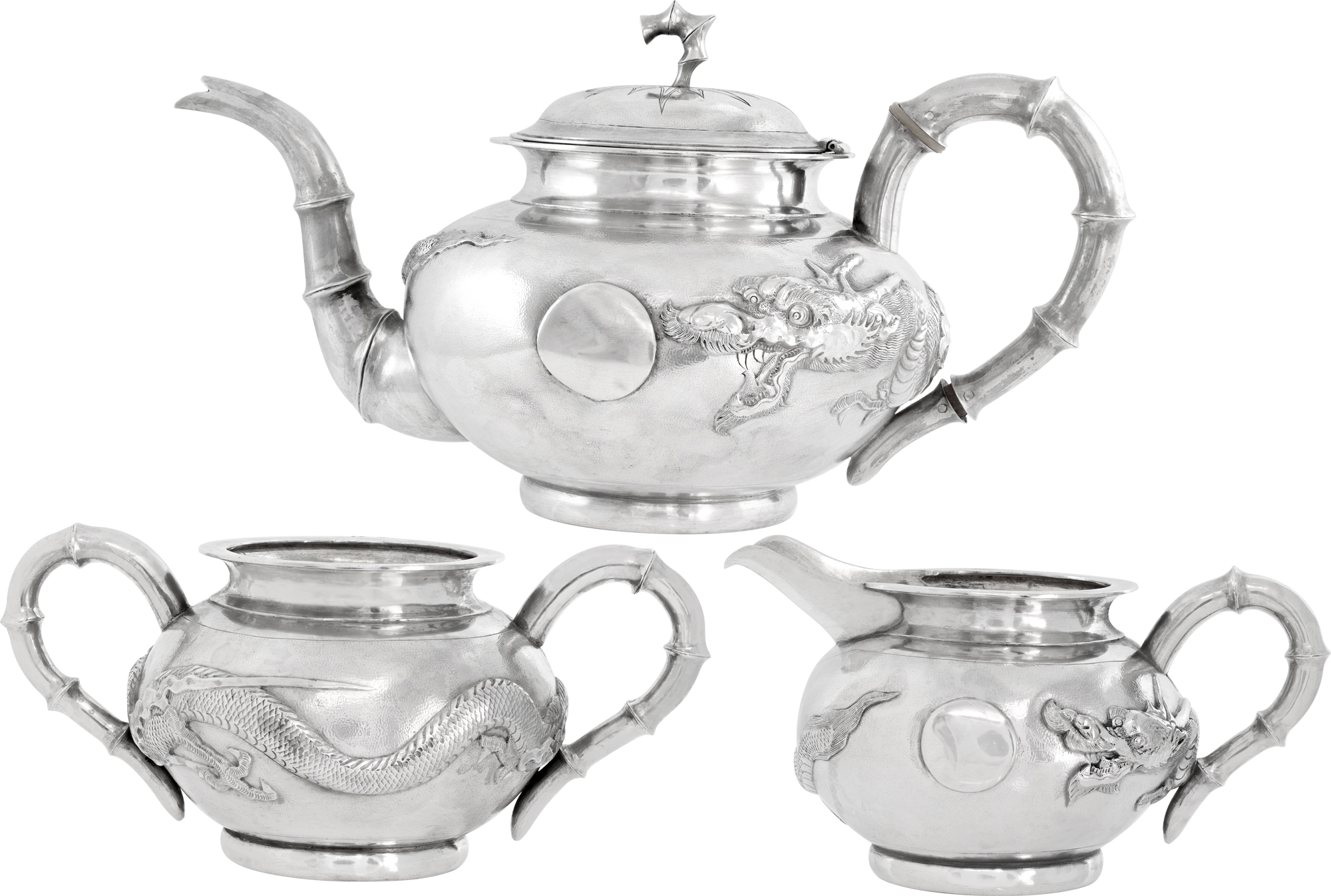
The three-piece silver tea set from China offers a practical way to apply these checks to a compact service. Start with the listing photograph to compare the silhouettes and visible decoration. If you’re considering a purchase, ask for close-ups of the marks on each piece and confirm the stated metal standard. The listing title gives the set’s origin and piece count, so use the individual marks and product details to investigate fineness and maker attribution. Three-piece silver tea set from China, SKU N518400
For a comparison, consider the previously sold Tiffany & Co. sterling silver tray in the Richelieu pattern. A separately acquired tray can complement a tea service and be collectible in its own right. If a seller describes a tray as original to a set, compare its pattern and period with those of the vessels and ask what supports their association. If you’re choosing a companion tray for entertaining, check that its usable surface fits the pieces comfortably. Tiffany & Co. Richelieu sterling silver tray, SKU N515068
Questions Collectors Ask Before Buying a Silver Tea Set
What affects the value of a pre-owned sterling silver tea set?
Maker, pattern, condition, silver content, and completeness all matter. An original service with documented provenance may command a premium when comparable pieces are scarce. An assembled service can still appeal if the design is cohesive and the price reflects the differences. Ask which pieces, lids, and accessories are included, and check whether the quoted weight includes handles or other materials. Compare like-for-like sets by maker, pattern, and condition whenever possible.
How should I care for or personalize an antique silver tea set?
Hand-wash sound pieces gently with mild soap and dry them promptly with a soft cloth. Keep hinged lids and handles with insulating fittings out of prolonged soaks, and avoid abrasive polishing around shallow marks or raised decoration. If you’re considering a new monogram, first check for existing engraving or signs of earlier removal. A period monogram can be part of a service’s history and may influence how collectors assess it.
Shopping for a Silver Tea Set Near Fort Lauderdale
If you’re shopping from Fort Lauderdale, the Gray & Sons showroom is in Surfside, across from Bal Harbour Shops. Bring your shortlist and ask which sets are available to view. In person, you can compare the clarity of the marks, the fit of a lid, and the way each vessel sits on a flat surface. If you’re browsing from home, the digital catalog offers a starting point. Gray & Sons Surfside showroom · Gray & Sons digital catalog
If your interests extend from estate silver to jewelry and timepieces, Gray & Sons also offers consignment, jewelry repair, and watch repair. You can browse pre-owned Rolex watches or review the options for selling or trading a watch while you build your collection. Consignment · Jewelry repair · Watch repair · Used Rolex watches · Watch sales and trade-ins
For your next tea service, start with a piece you’d enjoy using, then compare its marks, condition, and design with every vessel that accompanies it. Browse the hollowware collection for a matched service or a distinctive piece to pair with silver you already own. Keep up with new arrivals through the newsletter or request a print catalog. Shop sterling silver tea sets and hollowware · Newsletter and print catalog requests
Reviewing the Patek Philippe Nautilus Chronograph 5976/1G
NEXT ARTICLE
Pre-Owned Breguet Watches | The Watchmaker of Kings and the King of Watchmakers | November 28, 2026


